
If You Make Your (Procrustean) Bed...
...your team will lie in it

I found myself revisiting the old cliché “you make your bed, you lie in it” recently while I was reading C. Thi Nguyen’s excellent book, The Score. Nguyen gave me reason to reconsider what that old expression can mean to coaches. But first, a brief aside on Greek mythology to set the scene.

Procrustes was a figure in the adventures of Theseus. Procrustes was not a good person, offering travelers a bed to sleep in during their journeys but then torturing and killing them when they didn’t fit in the bed he offered them (and they never fit). His grisly treatment gives us the term Procrustean bed, which, to quote from his Wikipedia entry, describes situations in which “an arbitrary standard is used to measure success, while completely disregarding obvious harm that results from the effort.”
The aphorism about lying in the bed you made presents a different lesson, one about consequences. The idea is that your actions have consequences. When you make decisions and choose your actions, you are creating consequences you must live with. While reading Nguyen’s book, it occurred to me that the beds coaches make for themselves and their teams are often Procrustean in nature.1
Without realizing it, coaches frequently create arbitrary standards that don’t actually reflect what they initially set out to do. The harm that results from the effort is not physical or mental though. The harm done is a limiting of potential and a loss of values.

To me, the most prevalent version of coaches’ Procrustean bed is when coaches research what the “best” teams do as a way of focusing and directing the training and expectations for the teams they coach. There’s much to be learned by studying the characteristics of the “best” teams. But there’s a trap in such studies.
The output of studies of the “best” aren’t actually characteristics of particular teams, they’re what Nguyen calls metrics. For him, metrics have two key components: they function as scoring systems for value judgements and they use data to render those judgements (p. 100). That’s the trap. Without you realizing it, the study swapped characteristics for metrics.
When you collect characteristics across many teams, the characteristics cease being qualities they possess and, instead, become items on a checklist. In an effort to not get bogged down in too many details, the study sacrifices context so the results can be abstracted and aggregated. In his book, Nguyen describes the Four Horsemen of Bureaucracy and the sacrifice of context is the work of his first Horseman, Scale.
The Horseman of Scale gives us a powerful gift: He makes things comprehensible across vast territories, across very different people. He connects us quickly and easily. The Horseman of Scale makes coordinated action possible across great numbers of people. (p. 110)
Qualities don’t scale well. They require too much context to understand. There are too many interconnected factors that make a good team exactly who they are. Synergy is a sum of factors that doesn’t make sense when you try to tease it apart. Each good team has their own collection of factors that make them good. While there are commonalities among the best teams, the way those common factors are arranged and relied upon differ. The reasons why those common factors work for each team differ. And that synergy gets lost in aggregation.
Trying to aggregate the subtleties of each team into something meaningful is incredibly challenging because it’s about more than just the qualities but also about the connections between them. There’s no room for subtlety when you do things at scale and the only way these studies work is when you do them at scale. So you end up with a checklist of common features but no understanding of how those features actually show up in each team.
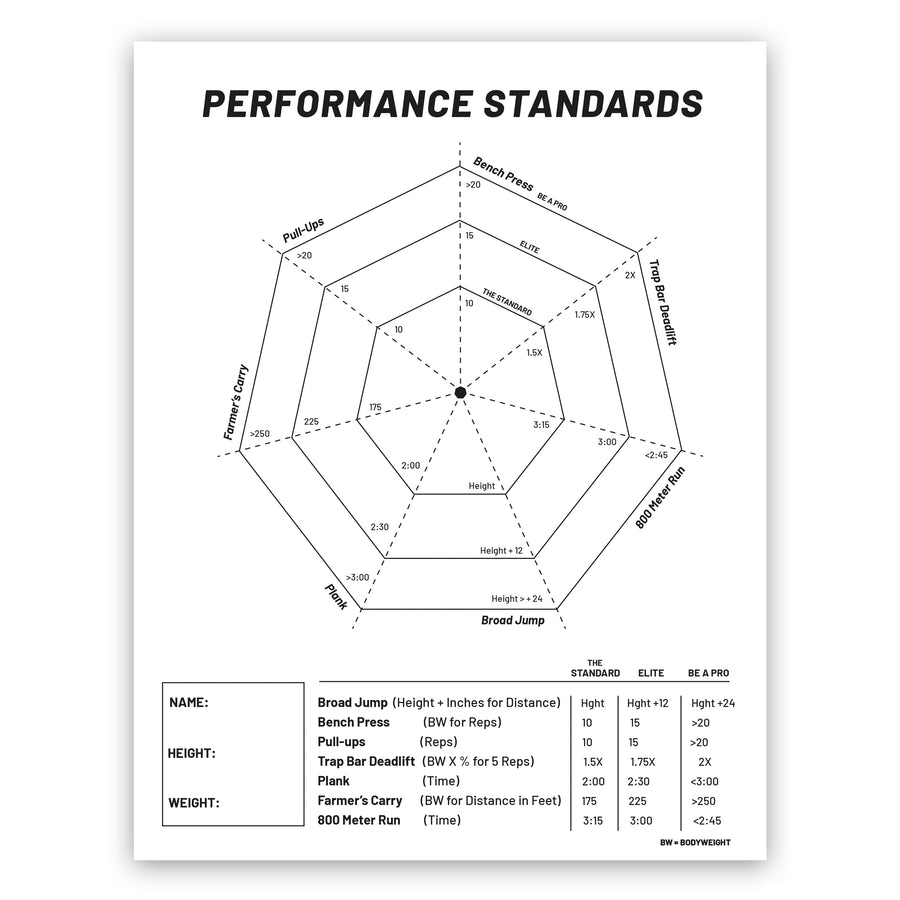
And if you don’t realize that the checklist isn’t the same thing as how teams actually embody the features on your checklist, that’s when the features become metrics. So you end up with a checklist full of “championship standards” or something like that. The goal for your coaching is no longer figuring out how to get the best out of the team in front of you, the goal is now to get the team to fulfill as many of the standards as possible, as often as possible. Your coaching goals are expressions of your coaching values so changing your coaching goals means you’ve also changed your values.
In his book, Nguyen writes that “metrics are engineered values” (p. 100). They are artificially constructed values, not ones that come from you and your context. Your study of the “best teams” was undertaken as a way to determine what you should value in your practice and your competition, not some imagined, theoretical ones. You started out valuing winning or valuing improved performance. But the study gave you engineered values and encouraged you to value the checklist instead of your understanding of your specific situation. You can’t value all the different contexts that gave rise to all the different items on your checklist. But having the checklist means you don’t have to. Nguyen puts it this way:
My deepest worry is not that metrics are inevitably false. Rather, they can be quite true of what they are measuring. But they speak so clearly - so accessibly - that they can drown out our awareness of everything else. (p. 109)
Your checklist isn’t a bad thing, but it drowns out the bigger question, how does this team best reach for those standards? That’s the awareness you can’t allow to be drowned out. The team doesn’t have to reach all the standards. There may be items on your checklist that this team just isn’t built to achieve. Your skill as a coach is in recognizing that fact and looking for other items on the list where the team can compensate. Nguyen puts it this way:
You’re centering a value that has been built to ignore anything particular about your context and personality, and anything that requires special sensitivity to deploy. You are making yourself more comprehensible, but less particular. (pp. 108-109)
That’s the thing about Procrustean beds, they don’t fit anyone. And the “best teams” bed doesn’t fit anyone because it’s trying to fit everyone. It’s trying to tell everyone, not just this team, how to play. Fitting everyone makes your checklist comprehensible, but it also makes it less effective. You lose the uniqueness of this team and you lose it at your peril. It’s much easier to flatten everything out into a set of common features, but ignoring features or combinations that aren’t common is where you miss out. That’s where the best stuff happens, in the exploration of how this team strives to be its best.
So often, studies of “the best” become exercises in boiling those teams down to things they all do when the beauty of their excellence is in how they express their uncommon identities. As a result of essentializing those teams and individuals, you chase an contrived, cobbled-together version of success. Chasing an artificial, scaled version of success will move you in a positive direction but not as far as a version of success tailored to this team will move you.
You can generalize what good teams do but not what this team should do. So, by all means, conduct studies of the best teams. They can teach a lot about what the best teams do. But they teach you very little about what the team you are coaching does. Don’t mistake what they do for what the team in front of you ought to do. Those are two different studies entirely.
While I think coaches of individual sports also fall into the trap I describe here, I think it’s more straightforward to discuss this topic in the realm of team sports.