
One Player at a Time - Cindi Miller
People First, Athletes Second.

I met Cindi Miller for the first time after her presentation on perfectionism at the 2025 AVCA Convention. While we have not known each other very long, our conversations flow so easily because of our shared views on coaching. Her background as a therapist informs her coaching in ways even the most experienced coaches can learn from. Although she played and coached both college and club volleyball, she is currently coaching at a high school.
What is “One Player at a Time”? - read here
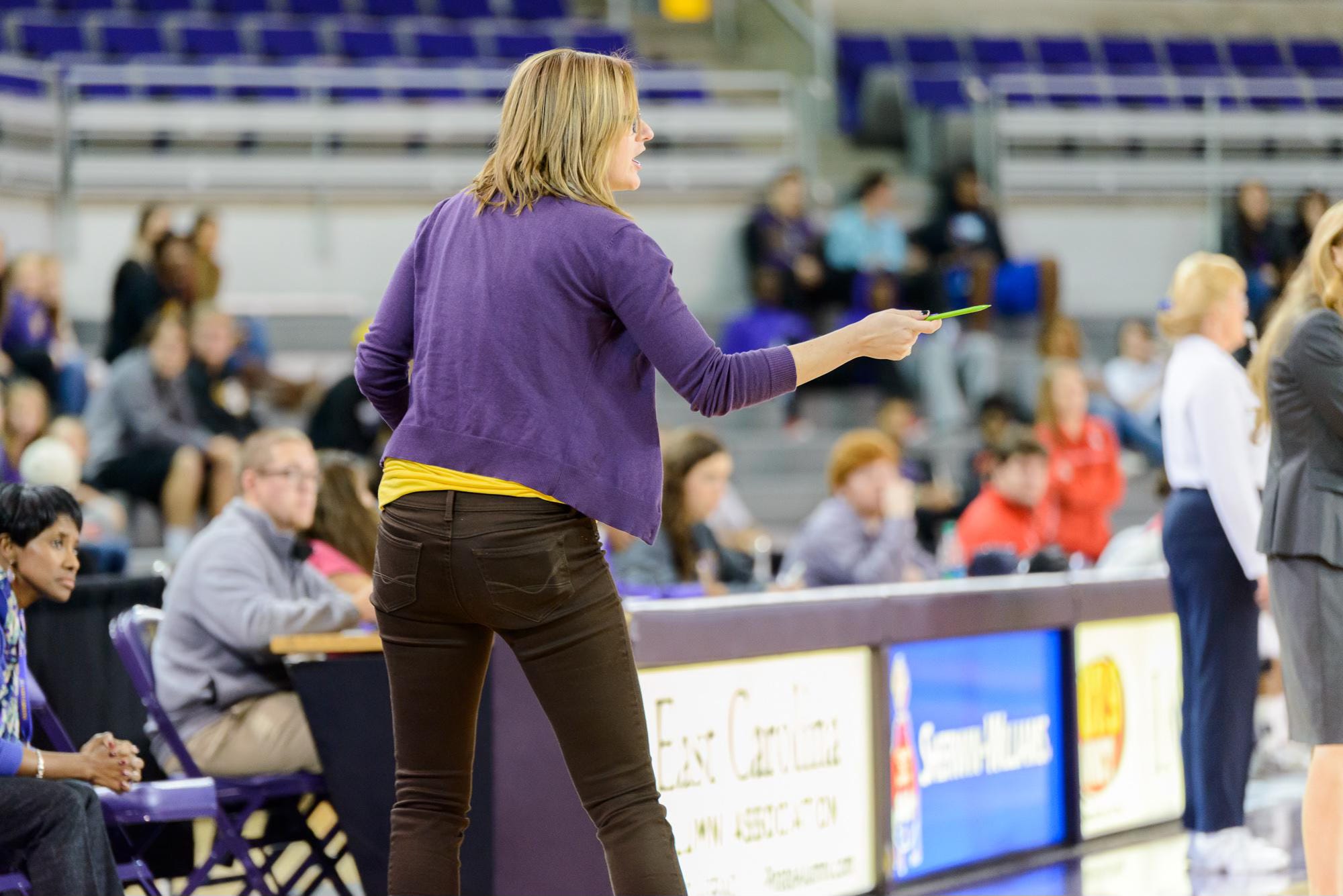
Like many coaches, coaching is the second act of Cindi Miller’s athletic career. But, you could say coaching is also her third or fourth act as well. And she packed even more into each act as well. When Cindi reflects on her playing career, she feels like she went from being very loose and celebratory to overly focused while in high school and then back to loose while in college. While she felt more loose, she also found herself treating playing as a job, telling herself that she was paid to perform. She also took the title of “student-athlete” very seriously. When she wasn’t in the gym, it was all about school. With that level of focus, it’s pretty impressive that she was able to feel loose while she was playing.
But that looseness belied her “have to” mentality around playing. Contrast that with Emma, a player Cindi worked with during her time coaching in college. Cindi describes Emma (not her actual name) as treating volleyball “more as a hobby” and that she approached the game with a “get to” mentality. In a word, Cindi described Emma’s approach as “joy”.
Cindi described Emma as “one of the most joyful people I’ve ever met”. Cindi described her playing self, on the other hand, as driven more by a sense of responsibility than anything else. That contrast is important because Emma’s approach to sports helped Cindi understand a lot about herself, about the coach she was, and about the coach she wanted to be.
Both Cindi and Emma were perfectionists as players but that perfectionism was expressed very differently in each of them. Emma was very much a people pleaser. Since many people-pleasing behaviors can also be called “coachable” behaviors, it’s important to distinguish between the behaviors and the motivations behind them. It’s hard to know if a player’s constant head nodding and attention to your every word is rooted in a desire to maximize their potential or to minimize the disappointment of others. Cindi came to learn that Emma’s coachability was a product of fear.
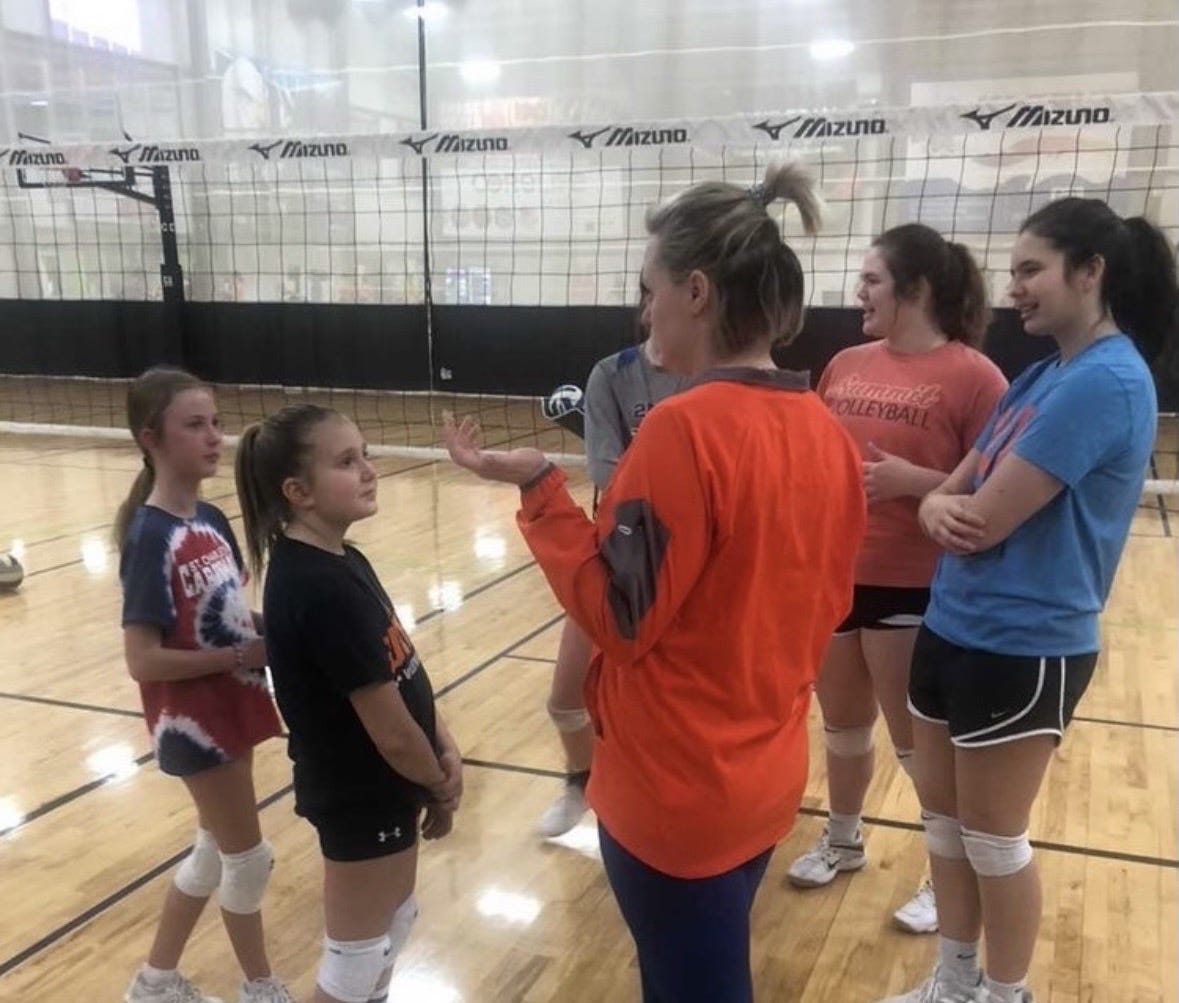
That fear doesn’t have to be caused by the coaches, it can be something players bring with them. But coaches can certainly bring it out of players, no matter their intentions. That’s something Cindi learned from Emma. Cindi, as a young, inexperienced coach, was often too tangled up in figuring out who she was supposed to be and that kept her from seeing who Emma was. Cindi, being close in age to the players she was coaching, felt the need to create separation between herself and them. Cindi also felt unprepared, saying “athletes came into my office and I felt I wasn’t qualified to help them.”
Cindi was caught in situation created by the way coaches are (or, better, are not) developed. Young, inexperienced coaches are left to their own devices instead of being guided by the coaches they work for and with. As a result, Cindi was powerless to help players like Emma in the ways they needed it most. Since no one helped Cindi figure out how to talk to Emma about anything other than volleyball, Cindi’s coaching was severely limited.
Cindi’s sense of not being prepared led to her to feel like, in her words, “I needed to know all the answers.” Unfortunately, knowing all the answers was restricted to volleyball stuff. She felt she wasn’t allowed to address issues of personhood, empathy, or compassion. That made anything more than the most rudimentary kinds of coaching awkward. As a young, female assistant coach, she was expected to be the “good cop” to the head coach’s “bad cop”. Cindi found herself enforcing rules that she didn’t align with. And, while she could feel that disconnect, she didn’t have any way of managing the situation. She told me she wanted “to be their safe space.” But when you don’t feel equipped or supported to talk about anything more than volleyball, how do you do that?
Cindi described the coaching part of her as being “emotionally disregulated”. She watched as Emma showed the “other end of the spectrum” of her joyful emotions during practice and competition. When Emma wasn’t feeling okay with how she was measuring up to people’s standards, it would hit her hard. Cindi watched Emma “power through” her negative emotions. Cindi talked about learning from Emma in moments like that, but she didn’t talk about being able to help Emma make sense of what she was going through. Cindi told me Emma “couldn’t verbalize where her feelings came from” and I don’t know if Cindi knew at the time where those feelings came from either.
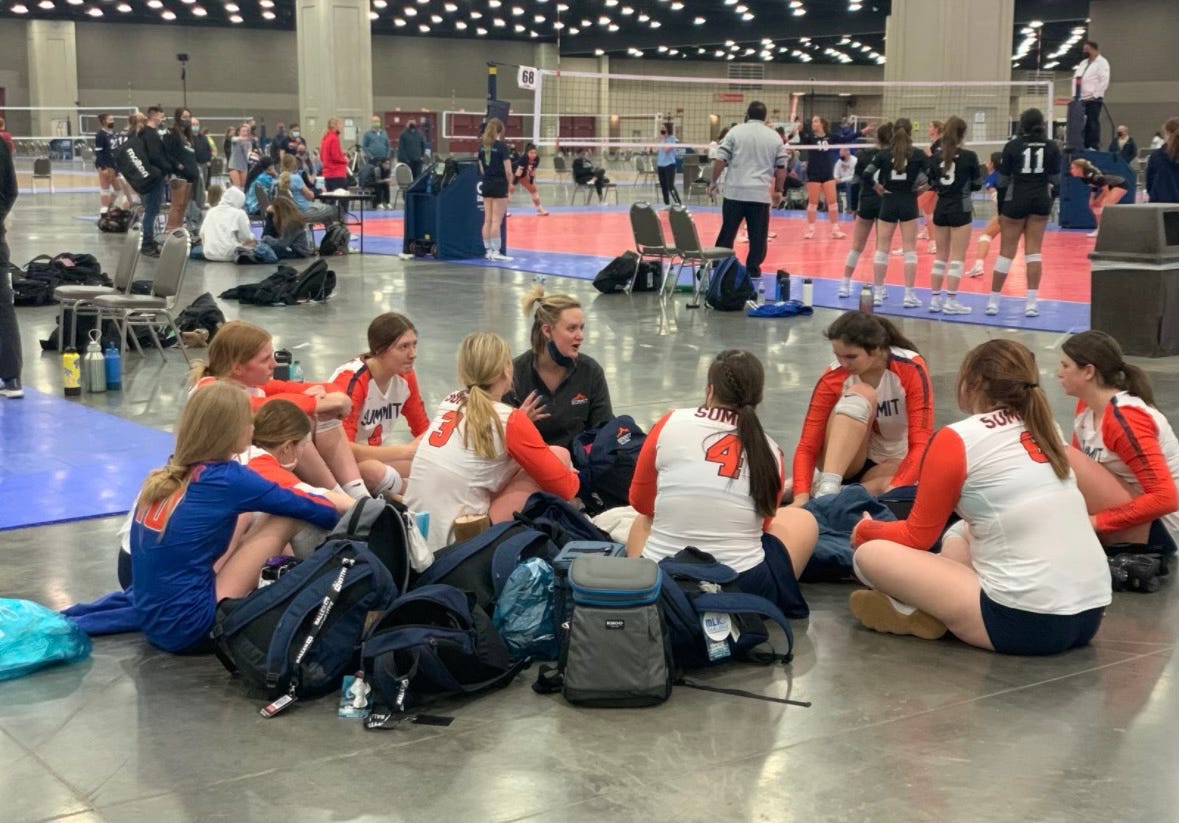
Cindi eventually left college coaching and also stopped coaching club volleyball for several years because the gap between her values and the values of the coaches and club she worked for was too much for her to reconcile. She said she “couldn’t be complicit in causing fear in athletes.” But, lest you believe this story is one of burnout and missed opportunities, Cindi is coaching again. She’s also in regular contact with Emma and other players from those college teams. She kept those experiences with her and learned from them as she studied to become a therapist. She brought her education to bear on her experiences and came to understand her coaching in a different light. She talked with former players and learned with them and from them about what coach-player relationships can be like.
Cindi recalls apologizing to Emma years later for her inauthenticity. She apologized for not allowing Emma and others to have the same experience she had as a college student and athlete. She remembers Emma giggling and saying there was nothing to apologize for (which, Cindi added, is exactly what a people pleaser would say). She recalls Emma calling her “Coach Cindi” and how that made Cindi realize that title was something she no longer wants to identify with. It might be appropriate to describe “Coach Cindi” as putting athletes first and people second. It’s hard to put anything other than sport first when you feel like you don’t have the tools or the support to coach people first.
Now, Cindi says her coaching is firmly rooted in “person first, athlete second”. To her, that means her coaching embraces that neither she nor people in her care should expect themselves to have 100% to give every day. It means not expecting people, including adults, to have perfect emotional regulation. It means not expecting perfect performance. Perhaps, above all, it means listening.
As Cindi returns to coaching, she’s asking herself how she can impact athletes in a different way, one that reflects her belief in “person first, athlete second”. She described the “whirlwind” the players in her care felt as they experienced compassion from a coach, something that “Coach Cindi” may have had but couldn’t express. Cindi seeks to feel emotionally regulated as she coaches, not allowing others to determine her mood the way they could when she was an athlete and, again, as a young coach. She’s “in love with light bulb moments right now”, helping people in her care to make connections, both athletic and emotional. She works to be “calm, cool, and collected”, showing people in her care how much she loves and cares about them.
But, perhaps most important to me, is that Cindi wants to feel joyful in her coaching. She never forgot how palpable Emma’s joy was to her and others around her. It may be the highest tribute a coach can give to a person they coached. Cindi embraced this emotion that she, herself, had such difficulty expressing for so long, and made it a centerpiece of how she and others experience her coaching.
Have questions for Cindi? You can ask me here, you can email her directly, or follow her on Instagram.