
Coach Something That Means Something (part 1)
Sociology of Sports Coaching #3.1

(Title inspired by the 1995 Pharcyde track Somethin’ That Means Somethin’)
I’m always trying to read books that stretch my thinking about coaching and learning. I recently read two books that stretched me a lot so I am writing about concepts from those books for two reasons. First, I don’t think these books are widely read so if I don’t share them with you, I don’t know that anyone else will. Second, selfishly, writing about these concepts helps me think through what they mean to me and how I could incorporate them into my own coaching. I see these as opportunities to wrestle with some big ideas in front of others. I hope you find these explorations both interesting and edifying.
The concept below comes from The Sociology of Sports Coaching edited by Robyn Jones, Paul Potrac, Chris Cushion, and Lars Tore Ronglan1. Specifically, this concept is taken from chapter eight, “Etienne Wenger: Coaching and communities of practice”, written by Chris Cushion.
There was one short phrase in this chapter that really started me thinking. It’s not the main point of the chapter but, to me, it’s the most important takeaway.
…meaning is the ultimate product of learning (Egan and Jaye, 2009; Culver and Trudel, 2008). p. 95
This simple statement belies a massive idea about coaching. Most coaches assume the ultimate product of learning is knowledge but I don’t think that fully explains what learning is or the role learning plays for coaches and players alike.
Allow me some latitude to set up my exploration of meaning. I want to start with art. I’ll use an example of a public art installation to help explain meaning.

The sculpture above resides in the Vatican Museums in Vatican City2. Like many works of art, there is a small sign nearby to tell you about it.
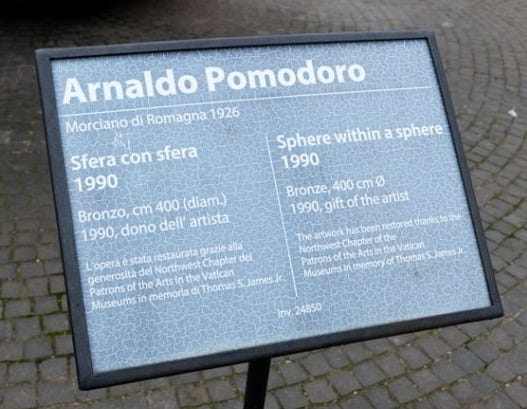
This little sign can be thought of as providing information about the sculpture and, after reading the sign, you could say you have some knowledge about the sculpture. But what have you learned about it? What do you really know about the sculpture at this point? While you know more than you did before you read the sign, I’d argue you have learned very little. But what more is there to know? Much more than just what appears on a little sign.
So what is there to learn? Meaning. That word is doing a lot of heavy lifting here, so allow me to explain how it’s being used.
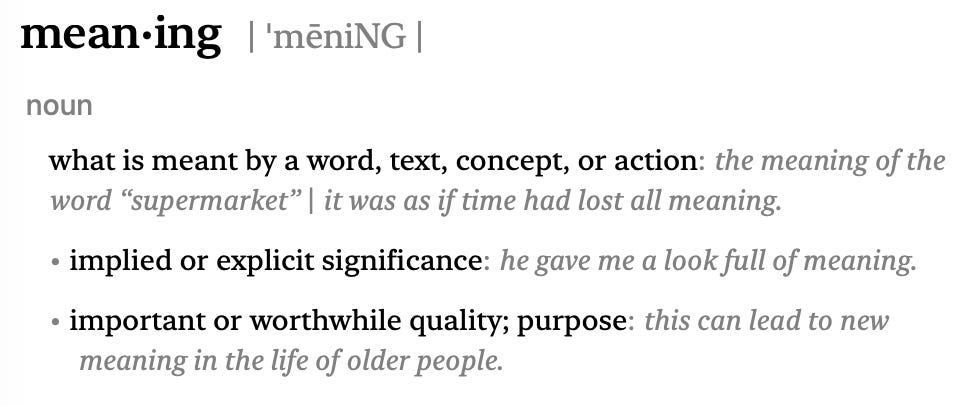
You can think of reading the little sign as “what is meant by a concept” but I’m most interested in “implied or explicit significance”. By this definition, you can think of meaning as a bridge between knowledge and understanding. While the little sign next to the sculpture gives you a little knowledge, it doesn’t give you understanding. It’s like knowing which words in this sentence are nouns. Knowing that gives you some information about the sentence but it doesn’t help you understand what the sentence is saying. If you want to understand the piece of art, you need things like this article about it to learn what the artist is trying to say through the piece. This is one way “meaning” can be used, to help you distinguish between knowledge and understanding. The sculpture becomes more than just a four meter tall piece of bronze from 1990, it becomes a symbol or a statement.
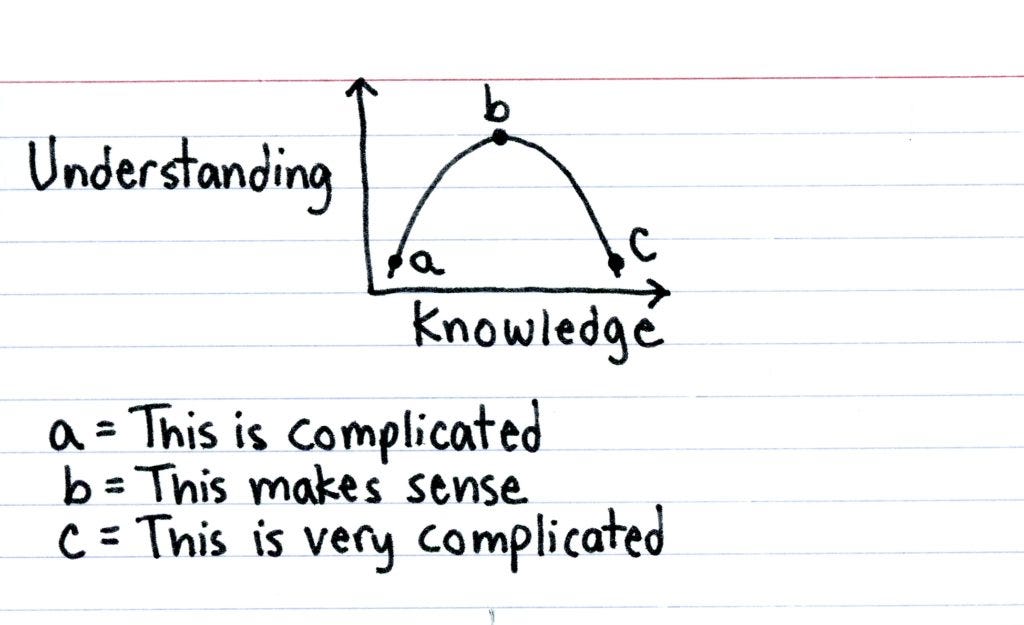
The separation between knowledge and understanding is everywhere in coaching. Coaches commonly mistake knowledge for understanding when they believe they only need to learn drills and tactics to be functional. They seek to understand sport and athletes mechanistically. They think they only need to be able to describe what athletes are doing in their game to say they are coaching. That’s like saying identifying parts of speech is the same as reading comprehension. That’s like saying the physical and historical characteristics are the most important things to know about of a work of art.
Assuming that acquiring knowledge is the same as learning is like assuming that piling bricks together is the same as building a house. For the bricks to become a structure, there must be a framework the bricks fit into. The larger framework gives the bricks their significance. So it is with knowledge. The coaching things you know require significance; they need understanding.
If, as Cushion states, meaning is the ultimate product of learning, then something won’t be understood until its meaning is established. Learning, then, is a process of discovering the many meanings of what you do. It’s the process of gaining understanding. This, as Cushion might say, is meaning-making. It’s the process of recognizing which bricks make sense in the building you are constructing. It’s the process of not only finding bricks that work but also of making your own bricks and of understanding how to fit all your bricks together.
If you read the article about the sculpture, you are presented with the perspective of the article’s author as well as the perspective of the sculptor. Through his quotations, you can learn about the sculptor’s meaning for his work. But there’s a key difference between learning about Pomodoro’s meaning and generating your own. Not to get too meta, but knowledge of his meaning isn’t, in itself, meaning; to you it’s just knowledge. While you might better understand what he made, that knowledge is not very helpful to you if you are creating your own art. And that’s what gives meaning its…umm…meaning.
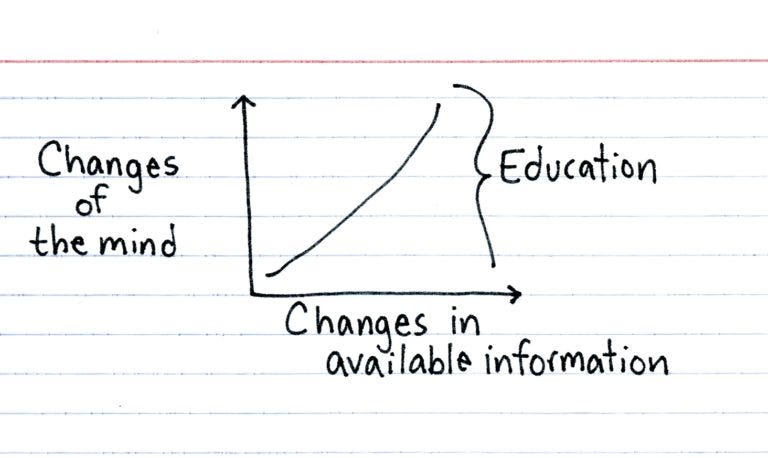
To create meaning, you have to wrestle with ideas yourself, not just read about the meanings of others. Learning means changing your perspective; it means changing your relationship to what you observe and do. Learning means looking at something again and seeing it with different eyes, ones that have been influenced by the understanding of others. But you need the meaning of others to understand your own meaning.
…rather than simply being in the learner’s mind, meaning is mediated by the differing perspectives among co-participants; it is ‘not a one-person act’ (Lave & Wenger, 1991: 15). (p. 98)
Meaning-making, and therefore learning, can’t be done alone. According to Cushion, you need “differing perspectives”. Learning means comparing your observations, thoughts, and interpretations with co-participants. The act of comparing can take many different forms and most coaches opt for comparing by talking about situations rather than experiencing those situations together with the people they’re comparing notes with. But that’s more like reading Pomodoro’s quotations about his work than standing in the courtyard taking in the work with someone else.
How do you find out Sfera con Sfera moves? You could watch the video above. But how do you find out what it feels like to stand in front of a 4-meter tall, intricately designed, spinning, brass orb? What’s it like to catch the glint of the sun off of it? To truly participate, you need to be in its presence. You need to have a direct relationship with it, not hear about someone else’s experience.
But the direct relationship has to be between you, the situation, and co-participants. To build your own meaning, you need others standing there with you so one of you can say to the other, “did you see that?” or, “look over there”, or, most importantly, “what do you think of that?” That’s what it means to co-participate. That’s how you establish meaning. You do it by comparing your thoughts to the thoughts of others interacting with the same situation as you. It’s the same for coaching.
Coaching is a social activity, and coaching practice – that is, the interaction of coach, athlete and context – is a reference point through which individuals (coaches and athletes) give meaning to their activities and manage their identities (Allen & Pilnick, 2007). (p. 106)
Cushion points out that coaches need co-participants when they coach. That may seem obvious; a coach without athletes and a practice or competition setting isn’t really coaching. But that also means coaches need co-participants to learn as well. Reading a book or watching a video about coaching isn’t learning because it isn’t social. There’s no opportunity to create meaning, that won’t happen until you’re actually working with athletes. You can compare notes with other coaches after the fact all you want, but that’s not learning the way standing next to each other in the middle of practice or competition is. If you want to get better at coaching, go coach with someone who can help you produce meaning in your coaching. This is why I think mentorship and apprenticeship are so valuable in coaching.
That’s where I’ll pick up in part 2.

Jones, R. L., Potrac, P., Cushion, C., & Ronglan, L. T. (2010). The Sociology of Sports Coaching. Routledge.
Pomodoro created many other very similar sculptures. For a list of them, see the Wikipedia entry about them.