
The (Arrested) Development of Expert Coaching (part 3)
Sports Coach as Educator #3.3

I’m always trying to read books that stretch my thinking about coaching and learning. I recently read two books that stretched me a lot so I am writing about concepts from those books for two reasons. First, I don’t think these books are widely read so if I don’t share them with you, I don’t know that anyone else will. Second, selfishly, writing about these concepts helps me think through what they mean to me and how I could incorporate them into my own coaching. I see these as opportunities to wrestle with some big ideas in front of others. I hope you find these explorations both interesting and edifying.
The concept below comes from The Sports Coach as Educator edited by Robyn Jones1. Specifically, this concept is taken from chapter eleven, “The development of expert coaching”, written by Paul Schempp, Bryan McCullick, and Ilse Sannen Mason.
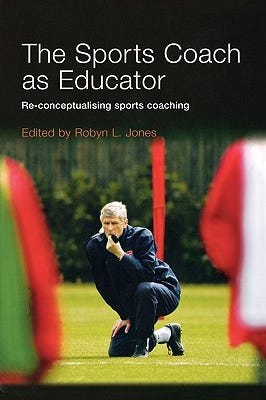
I was inspired by this passage from the chapter:
Borrowing from the work of David Berliner (1994) in educational psychology, the purpose of this chapter is to describe the developmental stages in becoming an expert coach. Specifically, the skills, knowledge, characteristics and perspectives common to coaches as they pass from beginner, to competent, to proficient, to expert coach will be identified (Bell 1997, Berliner 1994). While these stages seem to imply a hierarchy, everyone passes from one to the next on the journey toward improvement. One can, however, choose where one stops in developing expertise. To help meet the new challenges of sport, these stages will be presented so that sport coaches may identify their current stage and recognize the skills, perspectives and knowledge necessary to elevate to the next level and beyond. (p. 145)


In part 1, I gave some initial thoughts, both of the authors and of my own, about the how to define coach development and about the first two stages the authors lay out, beginner and competent. In part 2, I described the authors’ views on stage 3, proficiency, as well as my own thoughts on what it means to be proficient. In this part, I’ll discuss expertise, as well as dig into what I still haven’t figured out about coach development.
The last stage is perhaps the most fraught, possibly because it’s viewed as the ultimate goal of coaches. But, even if it is so highly sought after, that goal can still look very different for different coaches. And that variety maybe can’t be captured within a single framework.
Expert Stage
Experts, as far as the authors are concerned, are simply coaches who consistently get the best performances out of athletes in their care. The athletes “learn more and perform better than athletes of less expert coaches” (p. 155). Much of what the authors go on to describe about expert coaches are just extensions of skills evident in other stages of coaches: extensive knowledge, intuitive decision making, excellent planning, etc.. The key to expertise, it seems, is doing a larger variety of things that lead to positive outcomes more often.

While that seems a bit self-evident, I think it’s worth digging into. The authors are saying three things about experts: they do a wider range of things than proficient coaches, the things they do lead to improved athlete performance, and the things they do lead to improvement more often. To put it another way, expert coaches have more tools and they know better when to use each one to get more of what they’re looking for. But I wonder if there’s some survivorship bias in this description. Did the authors look at coaches they deemed to be experts and conclude that anything they did must be expert behavior? What if the results the authors observed were correlated to expert coaching behaviors but not caused by them? These are difficult questions to study and answer. Even if those questions don’t have easy answers, I think the points the authors make are still worth considering.
Why do expert coaches have more tools that work better? Because they’ve figured out what works for them and what doesn’t. But that’s not a reference to a list of moves they rely on or avoid, it’s a reference to them understanding their personal strengths and weaknesses. They don’t walk into situations, size them up, and pick a tool out of their toolbox. Picking a tool out of a toolbox infers that coaching actions are discrete, external things that coaches can acquire and I don’t think that’s the best way of looking at expert coaching. Instead, I believe they walk into a situation, have a conversation with that situation, and develop a way to add to that conversation that moves the situation forward. This view is taken from Donald Schön’s The Reflective Practitioner, a book the authors are fond of.
I believe expert coaches help a larger percentage of athletes a greater amount because of their understanding of specificity. They understand that individual athletes are just that, individuals. They aren’t identical, and coaches treat them identically at their peril. Helping each player get more out of themselves is a product of expert coaches’ ability to tailor their coaching to who they are coaching and the situation in which the coaching happens. This is another example of the metaphorical conversation the expert has with the situation.
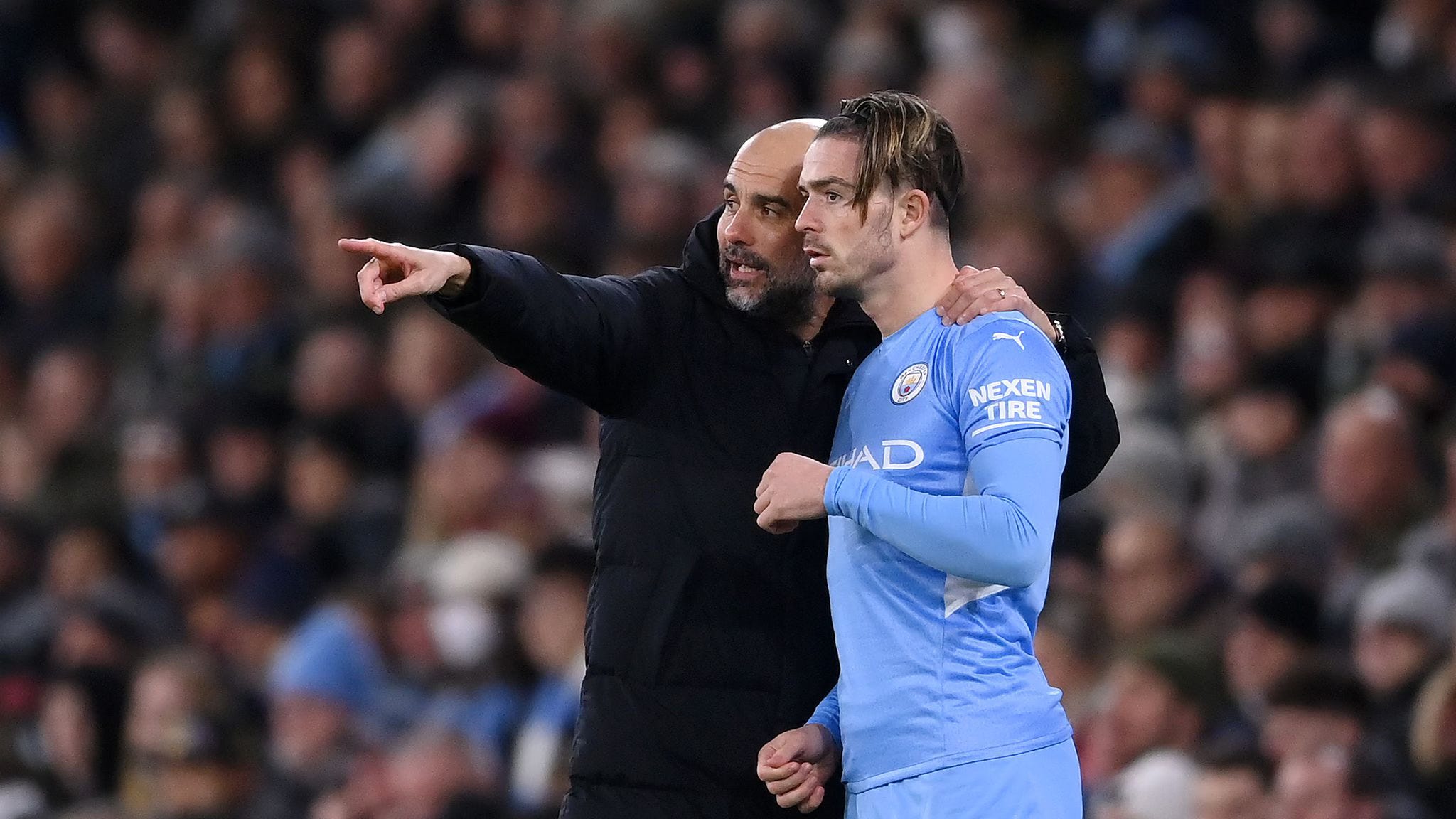
Developing these metaphorical conversation skills actually does take time because each coach needs to build their own viewpoint and voice. I think there are two main reasons why most coaches don’t reach this stage in their coaching. First, many coaches run out of time. As I’ve mentioned earlier, that’s where I think the coaching community should change how it treats beginning coaches. We have the opportunity to engage with them and help them shape how they view coaching. Second, it takes a lot of reflective work on your values and purposes. That work isn’t mandatory to coach, it’s just mandatory to be an expert coach. Many coaches will put their efforts into other areas of coaching. And that brings me to the stuff I can’t reconcile about coach development.
What Else Is There?
I can’t escape this feeling that there’s some kind of track that runs parallel to the stages of coaching expertise presented by the authors. Coaches can (and do) view their game and their place in it through a variety of lens. So expertise can look a lot of different ways and I think that variety of excellence is somehow both explained by and also outside the framework the authors have constructed. Their stages explain a lot about the skills coaches possess but I’m not sure those stages can tell me if a coach is good or successful. That might be because there aren’t single ways of defining either of those terms.
I think this might be due, at least in part, to the lack of coaching goals and values described in the framework. The skill framework laid out can be considered in the absence of coaching goals and values but I think, without goals and values, coaches are left wondering which skills are worth pursuing more intently than others.

As much as it seems to go against what the authors outline, I think it’s possible to be an expert at elements of coaching without aligning with the progression of stages. One coach can become very adept at collecting and applying drills and games in their practices. Another coach can create an amazing toolbox, full of techniques for players to master. Both coaches could be simultaneously considered expert coaches and yet that designation doesn’t capture what you or I might consider most important about coaching. They have found ways of coaching that satisfy them and they are working to maximize their skills within their definitions of coaching.
What might lead to different definitions of coaching and different paths to coaching expertise? The authors suggest one way for a coach to consider themselves successful, by measuring athlete improvement. But that characteristic is far from the only way. That measurement of success relies on a particular coaching value: player improvement. Are there other values a coach can hold that still allow them to become experts?
“Perform better” is a broad concept so it feels like there’s plenty of room for valuing different aspects of performance: physical ability, technical skill, competitiveness, among others. It seems like helping players improve in any of these areas could be an indication of coaching expertise. And there are still plenty of other values and goals coaches can have for their coaching and for the athletes in their care. I’m not sure I can say that players “performing better” is the only way to measure coaching expertise.

Another complex topic in coach development is learning from outside sources. The authors state that proficient and expert coaches learn from a variety of sources: other coaches, conferences, coaching books, non-coaching books, etc.. (I argue this is another thing beginning coaches don’t have to wait to do, but that’s not the point just now.) A coach’s goals and values will direct them to outside sources that hold ideas that are most useful to them. It’s not only important that coaches seek diverse sources of learning, but also that they are aware of what they learn from those sources. Seeking outside sources of learning is an expression of not only a coach’s skill but also an expression of their values. The expertise is not in seeking outside sources, but in knowing what to bring back to your coaching.
Maybe the most challenging thing for me as a coach developer is understanding the relationship between developing coaching skills and developing coaching values. I think both areas are vital for coaches and they are necessarily intertwined. What a coach wants to learn in one area is influenced by what they care about in the other. I think what makes mentoring coaches so challenging is when they are unaware that such a relationship exists. I go back to the Logic of Appropriateness: if a coach wants to know what to do in a given situation, they need to know who they are. As much as I’d love to just tell a coach what to do, my answer is rooted in who I am and I would be doing that coach a disservice by telling them what I would do instead of guiding them to what makes sense for them.
As awkward and dissatisfying as it would be in the moment, I think my job as a coach developer is to bring the coach’s attention to themselves before returning it to the situation. As with so many kinds of learning, it isn’t easy or comfortable and it often doesn’t make sense to the learner at first. But that’s better than imposing my own values on their coaching. But maybe that’s the most important lesson about expertise: it isn’t something that can be earned, given, or found. It doesn’t just happen over time, it has to be built.
Jones, R. L. (2006). The Sports Coach as Educator: Re-conceptualising Sports Coaching. Routledge.