
The (Arrested) Development of Expert Coaching (part 2)
Sports Coach as Educator #3.2

I’m always trying to read books that stretch my thinking about coaching and learning. I recently read two books that stretched me a lot so I am writing about concepts from those books for two reasons. First, I don’t think these books are widely read so if I don’t share them with you, I don’t know that anyone else will. Second, selfishly, writing about these concepts helps me think through what they mean to me and how I could incorporate them into my own coaching. I see these as opportunities to wrestle with some big ideas in front of others. I hope you find these explorations both interesting and edifying.
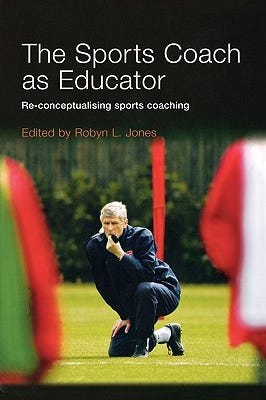
The concept below comes from The Sports Coach as Educator edited by Robyn Jones1. Specifically, this concept is taken from chapter eleven, “The development of expert coaching”, written by Paul Schempp, Bryan McCullick, and Ilse Sannen Mason.
I was inspired by this passage from the chapter:
Borrowing from the work of David Berliner (1994) in educational psychology, the purpose of this chapter is to describe the developmental stages in becoming an expert coach. Specifically, the skills, knowledge, characteristics and perspectives common to coaches as they pass from beginner, to competent, to proficient, to expert coach will be identified (Bell 1997, Berliner 1994). While these stages seem to imply a hierarchy, everyone passes from one to the next on the journey toward improvement. One can, however, choose where one stops in developing expertise. To help meet the new challenges of sport, these stages will be presented so that sport coaches may identify their current stage and recognize the skills, perspectives and knowledge necessary to elevate to the next level and beyond. (p. 145)

In part 1, I gave some initial thoughts, both of the authors and of my own, about the how to define coach development and about the first two stages the authors lay out, beginner and competent. In this part, I’ll discuss proficiency.
Beginning coaches, you may remember, tend to rely on algorithms to coach because they view coaching environments as stable and consistent. This reliance narrows their vision to mostly things related to players following coach plans and instructions because everything else can be thought of as constant. Competent coaches recognize the dynamic nature of coaching situations and plan differently to account for that. The main difference between them is how they view coaching situations. I think that shift in view may be more important than the differences between any other stages. But let’s get into the next stage anyways.
Proficient Stage
According to the authors, a big difference between competent coaches and proficient coaches is what they notice. In addition to seeing what their team needs, proficient coaches also see what the individuals on the team need as well. They can keep track of individual players’ performances while managing the demands of practice and competition.
I think the authors assume proficient coaches add this skill on top of the skills of a competent coach but, if I’m honest, I’m not sure a coach has to adopt the view of a competent coach in order to exhibit the skills of proficiency. A coach can notice how both a whole team as well as individuals on the team are or are not following rules. A coach can have intricate plans for both a whole team as well as individuals. So maybe there’s more to proficiency than just seeing both team and individuals.
The authors say proficient coaches notice the things that matter most; they don’t treat everything as being equally important. Another way of describing a proficient coach’s approach is:
While beginning and competent coaches often see the symptom, it is the proficient coach who can see past it and identify the cause. Once the cause has been identified, it is far easier to supply the appropriate cure. While a beginner flounders in futile attempts to cure all the symptoms she or he sees, the proficient coach easily cures the multitude of symptoms by eliminating the cause. (p. 152)
I don’t think a coach can grasp what is most important in a situation without critically evaluating what the situation actually is first. In that sense, I would put this skill after competence. But it also feels like the authors are resorting to flowery language without really specifying how these skills are developed, they only indicate that proficient coaches have developed them.
The authors seem to believe that skills like being able to notice both player and team progress and diagnosing causes are products of time and I’m inclined to agree, but with reservations. I think they’re describing the world as it is: it takes so much time for coaches to expand their vision because they’re allowed to spend their early coaching careers doing things that don’t build coaching expertise. But that doesn’t mean they have to take so much time to develop that wider vision. There’s nothing magic about the passage of time that improves coaches by itself. Coaches develop because they change their behaviors to meet changing situations. There’s nothing requiring coaches to wait to change their behaviors. Coaches could accelerate their development by choosing (or being mentored to choose) to focus on different things.
The authors do make a recommendation about how coaches might do this: “Beginning and competent coaches can speed the development of this process by attempting to identify the environment cues that are most pertinent to a player’s performance and the lesson goals…” (p. 153). I’ll build on their recommendation by quoting from a different book, Adam Grant’s Hidden Potential: “Accelerating learning requires…being brave enough to use your knowledge as you acquire it” (Grant, 2023: 33). There’s a lot of uncertainty for coaches who choose such a path but I think that’s for the better because coaching isn’t about certainty, no matter how much coaches may act as if it were so.
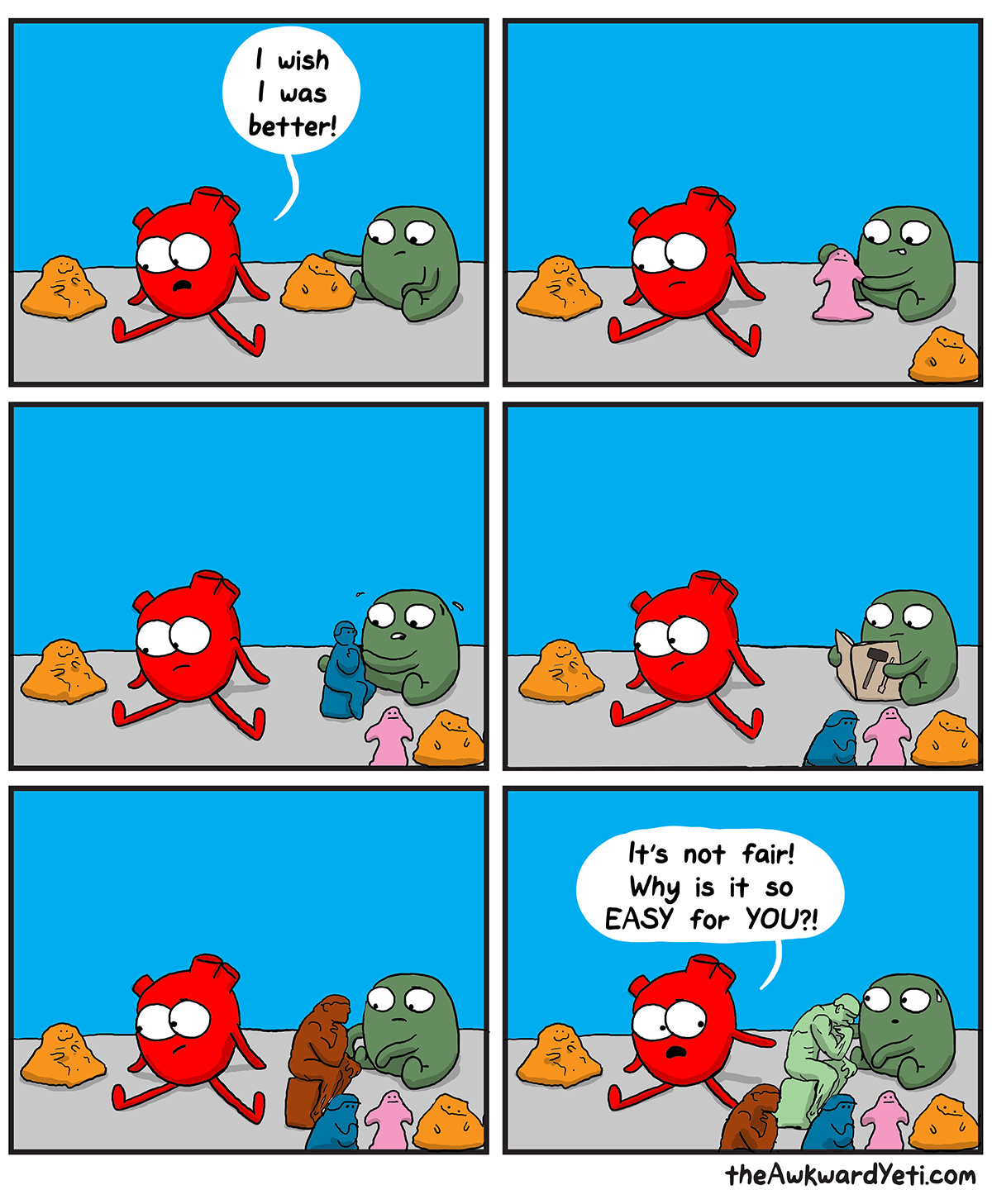
So getting to proficiency can happen slowly, over time, mostly by chance. Or it can be achieved by creating and taking chances. I think a beginning or competent coach would have a difficult time figuring out how to create such chances by themselves but I think they could learn from more knowledgeable others that took an active interest in their development. I think guidance from mentors could help less experienced coaches feel secure in exploring and taking chances instead of seeking security through rules and procedures when they are left to their own devices.
There’s a lovely phrasing of the idea of exploring and taking chances instead of seeking safety that I am borrowing from Martinus Evans, founder of the Slow AF Run Club (I highly recommend checking out his story and his mission). He said he didn’t have to be competent to belong, he said he needed to “be there to become”.
Regardless of how coaches find their security, it seems that feeling secure positions coaches to learn and develop sufficiently to be considered experts. That’s where I’ll pick up in part 3, talking about expertise and what I still can’t account for in coach development.

Jones, R. L. (2006). The Sports Coach as Educator: Re-conceptualising Sports Coaching. Routledge.
Really appreciate you sharing this and thinking out loud with it. There’s a lot here that feels honest and useful, especially the emphasis on how a coach’s view of the situation shapes everything that follows. That shift—from seeing coaching as stable and rule-based to something dynamic and evolving—feels like a cornerstone insight.
I also like where you push back on the idea that time alone creates expertise. That’s a big one. The idea that development can be accelerated through intentional shifts in attention and behavior (rather than just years on the sideline) is something more coaches probably need to wrestle with.
Where this got me thinking, though, is around the idea of “seeing causes” and “applying cures.” I wonder if that framing still keeps us a bit stuck in a linear model—like the coach’s job is to diagnose and fix. In reality, what we often call a “cause” might just be one piece of a constantly shifting interaction between player, task, and environment.
So instead of getting better at identifying the right cause, maybe part of development is getting better at shaping the environment so different behaviors emerge in the first place.
That might shift proficiency from having better answers to designing better situations.